


Please Leave Us A Message
Privacy statement: Your privacy is very important to Us. Our company promises not to disclose your personal information to any external company with out your explicit permission.
 Yongkang Ruixiang Metal Products Co., Ltd.
Reusing frying oil is normal in both home and commercial kitchens, but the step that decides whether it stays safe is filtration — and most kitchens do it with the wrong tool or at the wrong temperature. Neutral foods like fries can stretch oil to eight uses, while fish should be cooked once and discarded, yet the difference is lost if burnt particles stay in the vat. A Cooking Oil Strainer with a proper steel mesh removes those particles after every batch, and doing it at 200–250°F — when oil flows but does not burn — is the habit that keeps flavor clean. Ruixiang Metal builds filtration tools sized for this exact window, with heat-tolerant handles and a reinforced mesh seat.
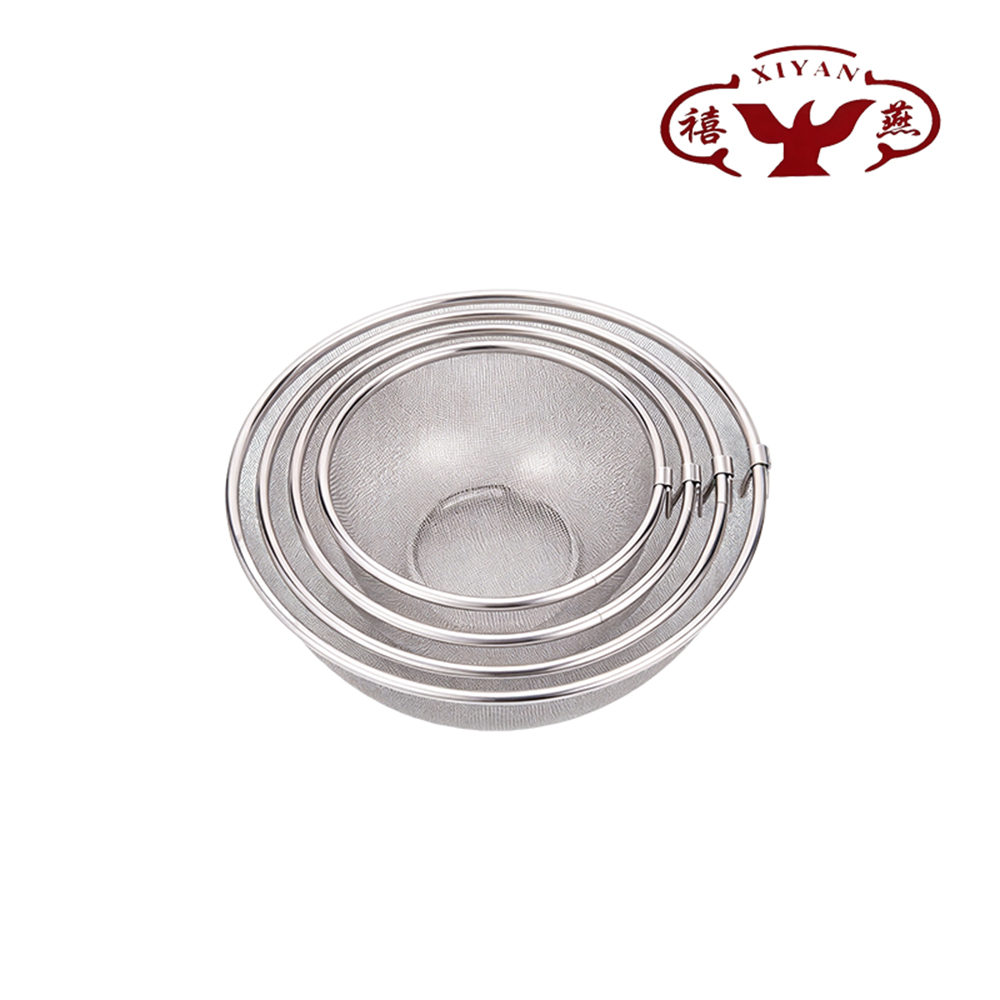
Before oil reaches the filter, loose food bits must be lifted out of wet, cooled loads, and that is where a sturdy wash tool earns its keep in the fry workflow. A Draining Basket used to lift and shake fried items lets excess oil drain back to the vat instead of pooling on the plate, and a fine, even hole pattern catches crumbs that would otherwise burn in the next batch. Yongkang Ruixiang Metal Products Co., Ltd. makes these in 304 so they tolerate hot, greasy handling and dishwasher cleaning without pitting.
| Food fried | Safe reuse count | Notes |
| Fries, veg, dough | Up to 8 | Neutral, low residue |
| Meat (chicken, pork) | 2–4 | Keep to meat only |
| Fish, seafood | 1 (then discard) | Flavor lingers permanently |
The practical routine is simple: cool the oil to the 200–250°F window, pour through a steel Strainer of about 200 mesh (roughly 75 microns) into a sealed container, label it with date and food type, and store it away from light and heat. Filtering while too cool clogs the mesh; filtering while too hot risks burns and can damage non-metal parts. Ruixiang Metal reinforces the mesh seat so it survives daily hot pours rather than bowing after a week.
A common failure is reusing the same container for fish and fries, which permanently taints the oil with seafood flavor and ruins every later batch. Keep dedicated, labeled containers per food category, and discard oil that smells rancid, foams, or smokes below frying temperature regardless of count. A cheap clip-on thermometer removes the guesswork on temperature, and a sealed, nearly full container slows oxidation during storage. These habits cost minutes per shift yet protect both the oil budget and the plate.
✅ Bottom line: Lift solids with a fine wash tool, then filter hot oil through steel mesh at 200–250°F into a sealed, labeled container.
The cleanest fry stations separate hot, messy work from guest-visible areas, and that separation protects both food safety and presentation. A Stainless Steel Fruit Basket belongs on the display side of the kitchen — a breakfast bar or buffet — far from splatter and heat, never near the fryer where it would collect grease and fail its real job. Ruixiang Metal designs display pieces for that front-of-house role with a polished, seamless base, while the wash and filtration tools stay in the back to do the dirty work.
Keeping the two zones distinct also simplifies sanitation: front-of-house pieces need only a quick rinse and polish, while back-of-house steel sees detergents and high heat that demand verified 304. Mixing them — say, using a display bowl to catch oil — cross-contaminates and shortens the life of the wrong tool. Specifying each piece for its actual duty, and buying both from one China factory, keeps the station coherent and the paperwork simple. Ruixiang Metal documents grade so health inspectors see a deliberate, compliant setup.
Sanitation schedules tie it together. Back-of-house steel that meets detergents and high heat daily should be inspected for pitting monthly, because a compromised mesh seat traps bacteria and breaks during a pour. Front-of-house display pieces need only a quick rinse and polish, but they should never migrate to the fry area where grease film builds and cleaning chemicals differ. Train staff on the two-zone rule so the right tool stays in the right place, and the whole station reads as deliberate and compliant to anyone who walks past.
✅ Bottom line: Keep display serveware off the fry line; assign each steel piece to its true duty zone for safety and longevity.
Q: What mesh count is best for filtering used cooking oil? A: Around 200 mesh (approximately 75 microns) captures fine sediment without stalling the pour; use a coarser pre-filter for heavily breaded loads, then refine. Ruixiang Metal can match a single mesh spec across your order.
Q: At what temperature should I filter oil? A: Between 200 and 250°F — fluid enough to flow, cool enough to handle safely. Below that it clogs; above it risks burns and can damage non-steel parts.
Q: How many times can I safely reuse oil? A: Two to eight times depending on the food: fries and vegetables up to eight, meat two to four, seafood once. Always strain after each use and discard if it smells rancid, foams, or smokes below frying temperature.
Ruixiang Metal is a direct wholesale manufacturer in Yongkang offering OEM/ODM custom filtration, wash, and display steel tools with material documentation and FOB/CFR/EXW shipment. Tell us your fry volume and we will kit the station end to end with samples — respond within one business day.
Mobile: +86 13868957824
Email: ruixiangmetal@qq.com
Website: www.ykruixiang.com
Email to this supplier
Privacy statement: Your privacy is very important to Us. Our company promises not to disclose your personal information to any external company with out your explicit permission.
Fill in more information so that we can get in touch with you faster
Privacy statement: Your privacy is very important to Us. Our company promises not to disclose your personal information to any external company with out your explicit permission.